


Background: What is image-based sexual abuse?
Image-based sexual abuse (commonly known as ‘revenge porn’) is the act of sharing images or videos of an individual (the ‘victim’) that are sexually explicit (displaying nudity or showing the person engaged in a sexual act) without that person’s consent.
The images or videos may be shared on specialized ‘revenge porn’ websites, on social media, via email, text, or messaging services, or shared with specific individuals, such as the victim’s family or employers. The images may also be shared offline. Sharing images or videos that have been photoshopped or otherwise altered in any way can also be considered image-based sexual abuse.
Consent is required at two stages:
- when the image or video is taken, and
- again when it is shared with any third party.
In some cases, the first level of consent is missing, and the images are not obtained with consent: for instance, the victim may have been unaware the image was taken, coerced into sharing the image, or the perpetrator may have stolen or hacked the image. In other cases, an image that was shared freely in the context of an intimate relationship is then shared with others without the victim’s consent.
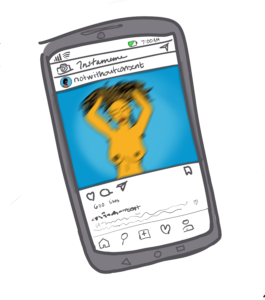
“‘Revenge porn’ is usually the last leg in the vicious cycle of violence and abuse committed against a vulnerable victim. It usually starts with verbal, emotional, financial, and then sexual abuse. If the girl doesn’t want to continue the relationship, then revenge porn can come next.”
– Jelen Paclarin, Women’s Legal and Human Rights Bureau (Philippines)
Why call it "image-based sexual abuse"?
This form of abuse is widely known as ‘revenge porn,’ often understood in the context of a vengeful ex-partner distributing sexual images or videos of their former partner following the breakdown of their relationship.
However, the term ‘revenge porn’ does not fully reflect the scope, motivation and nature of the crime, and how it is experienced by victims. Offenders might be motivated by a range of factors beyond revenge:
- financial gain,
- the desire for power or control over the victim,
- the desire to coerce or harass the victim, or
- the desire for fame, social status or notoriety.
In addition, the emphasis on ‘revenge’ shifts the focus away from the harm done, using victim-blaming language. Victims of image-based sexual abuse have spoken publicly about the detrimental impact the crime has on their life. These accounts give an insight into the far-reaching impact of the crime and offer further evidence of the inadequacy of the term ‘revenge porn’. Sharing sexually explicit images of an individual without that person’s consent is not ‘pornography’ – it is abuse, and should be understood as such. For that reason, women’s rights campaigners, academics, and others are advocating for new terminology, including: ‘image-based sexual abuse’. The term ‘image-based sexual abuse’ clearly reflects its nature as a form of gender-based violence (GBV).
“We have a terminology issue when it comes to this crime. Calling it “revenge porn” is sometimes unhelpful as it is not always about revenge. The images that are shared are meant to be private, but pornography, by its very definition, is not. Besides, the crime does not necessarily include voyeurism within its fold, even though victims quite often do not know that their images are being taken. While the law on voyeurism was enacted prior to the internet age, it has not been amended to include the use of mobile phones and new technology. Hence, the law is inconsistent on this issue.”
– Sophie Mortimer, Revenge Porn Helpline (UK)
Consequences of Image-Based Sexual Abuse
Image-based sexual abuse, as a form of gender-based violence, has a significant impact on victims. Victims of image-based sexual abuse report serious and sustained psychological distress as a result of the crime, including post-traumatic stress disorder, anxiety and depression. When an image is shared without consent, victims experience a sense of violation and feel a loss of control. In this sense, the mental health effects of image-based sexual abuse are similar to those reported by survivors of sexual assault.
Victims of image-based sexual abuse may also experience harassment which can have far reaching personal and professional consequences. Victims may fear physical attack, a fear that increases where personal data is shared alongside the image and where comments are posted online encourage further violence. They may lose their jobs, homes, and be ostracized from their families, or their cultural or religious communities. Any or all of these contribute to a victim’s loss of identity.
As with other forms of GBV, victims of image-based sexual abuse may experience ‘victim blaming,’ including by authorities such as the police, or service providers. Victim blaming can be experienced like a ‘second assault’ or ‘secondary victimization’. It results in silencing – victims fear being blamed and therefore do not seek out the services and support that they need.
“Due to innumerable loopholes, legal remedies are not easily available at all. Most women do not report such incidents. Those who do suffer a lot. They are victimized brutally and then they tend to withdraw and go into isolation, instead of being able to expose the perpetrator and bring him before the court of law so that he faces legal consequences for his actions. The victim also becomes a topic of discussion in every forum, particularly in the media….Many women actually end their lives due to the stigma and shame they experience. So for that reason, I think remedies need to be strengthened so that they are easily accessible for women.”
– Ayesha S., Survivor (Pakistan)